
Surgical Treatment for Degenerative Spinal Disorders in Mumbai
Non Surgical Spine Treatments
Surgical
Recent Advances
Teleconsultation
CALL FOR APPOINTMENT
8960599999 / 9999985957
drdhanish@dspinesurgeon.com
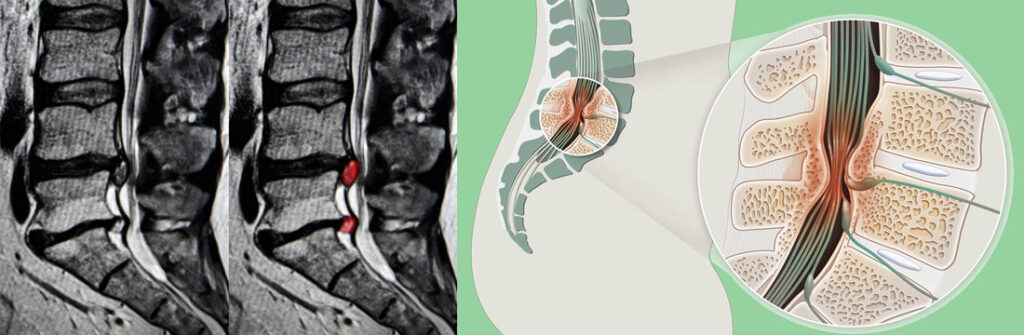
D Spine Clinic provides specialist evaluation and surgical treatment for degenerative spinal disorders in Mumbai when age-related or structural changes in the spine are causing significant nerve compression, neurological symptoms, instability or loss of function.
Consultations are led by Dr Dhanish Mehendiratta, Orthopaedic Spine Surgeon. Surgery is considered only after the symptoms, clinical examination and imaging findings have been assessed together and when an operation is expected to provide a meaningful benefit.
Degenerative Spine Conditions We Treat
Degenerative changes can affect the discs, joints, nerves and supporting structures of the cervical or lumbar spine.
Conditions evaluated at D Spine Clinic include:
- Degenerative Disc Disease – age-related changes affecting the structure and function of a spinal disc
- Spinal Stenosis – narrowing around the spinal canal or nerves
- Herniated Disc – displacement of disc material that may irritate or compress a nerve
- Facet Joint Arthritis – degenerative changes affecting the small joints of the spine
- Spondylolisthesis – movement of one vertebra relative to another, which may sometimes cause instability or nerve compression
Degenerative changes seen on a scan do not always cause symptoms and do not automatically require surgery. Their significance depends on whether they correspond with the patient’s pain, neurological findings and functional limitations.
When Is Surgery Considered for a Degenerative Spine Condition?
Many degenerative spinal conditions can initially be managed with medication, physiotherapy, rehabilitation, activity changes or targeted injections.
Surgical intervention may be necessary when:
- Persistent symptoms have not improved with appropriate non-surgical treatment
- Nerve compression is causing significant or progressive weakness
- Spinal cord compression is affecting walking, balance or hand function
- Spinal stenosis is substantially limiting walking or everyday activity
- There is clinically significant instability or deformity
- Structural findings on imaging correspond with the patient’s symptoms and examination
The presence of degeneration alone is not an indication for surgery.
Assessment and Surgical Planning at D Spine Clinic
Dr Dhanish reviews the patient’s symptoms, neurological findings, previous treatment and available investigations before recommending surgery.
Imaging may include X-rays to assess alignment or movement, MRI to evaluate discs, nerves and the spinal cord, and CT where more detailed bone assessment is required.
The aim is to establish three things:
- Which spinal structure is responsible for the symptoms?
- Does the condition require surgery?
- If surgery is appropriate, what is the least extensive procedure likely to address the problem?
Surgical Options for Degenerative Spinal Disorders
The operation depends on the condition, spinal level, neurological findings and whether instability is present.
Decompression Surgery
Procedures such as laminectomy, laminotomy or foraminotomy may be used to create more space for compressed nerves or the spinal cord.
Discectomy or Microdiscectomy
A portion of a herniated disc may be removed when it is compressing a nerve and producing persistent neurological symptoms.
Spinal Fusion
Fusion may be considered when decompression needs to be combined with stabilisation, particularly where clinically significant instability, deformity or spondylolisthesis is present.
Minimally Invasive Surgery
Selected decompression or fusion procedures may be performed using minimally invasive approaches that aim to reduce disruption to surrounding tissues. Suitability depends on the condition and surgical objective.
Not every degenerative condition requires fusion, and not every patient is suitable for a minimally invasive procedure.
Why Choose D Spine Clinic for Degenerative Spine Surgery?
- Specialist Spine Expertise: Dr Dhanish Mehendiratta has dedicated training in cervical and lumbar spine surgery, including fellowships in India and the UK.
- Diagnosis Before Surgery: Symptoms, examination findings and scans are assessed together before surgery is recommended.
- Multiple Surgical Options: Treatment may include decompression, discectomy, fusion or selected minimally invasive procedures depending on the condition.
- Rehabilitation and Follow-Up: Recovery planning may include physiotherapy, rehabilitation and post-surgical follow-up.
Consult Dr Dhanish Mehendiratta for Degenerative Spine Surgery
Dr Dhanish Vinod Mehendiratta is an Orthopaedic Spine Surgeon with specialist training in cervical and lumbar spine surgery.
His spine training includes fellowships with the Association of Spine Surgeons of India at Hinduja Hospital, AO Spine at the Indian Spinal Injuries Centre and Nottingham University Hospitals in the United Kingdom.
At D Spine Clinic, patients seeking spine surgeons in Mumbai for degenerative spinal conditions can consult Dr Dhanish for diagnosis, review of scans, non-surgical treatment planning, decompression, stabilisation and surgical second opinions.
Patients who have already been advised spine surgery can also consult Dr Dhanish for a review of the diagnosis, proposed procedure and available treatment options.
Book a Degenerative Spine Consultation
Consult Dr Dhanish Mehendiratta for evaluation of a degenerative spine condition, review of scans, surgical planning or a second opinion before surgery.
Frequently Asked Questions
I have degeneration on my MRI. Does that mean I need spine surgery?
No. Degenerative changes are frequently seen on spine scans and may not always be responsible for symptoms. Surgery is considered when the imaging findings correspond with the patient’s symptoms and examination and there is a clear problem that surgery can reasonably address.
What should I bring for a degenerative spine surgery consultation?
Bring your MRI, X-rays or CT scans, previous reports, prescriptions and details of physiotherapy, injections or other treatments already tried. If another surgeon has recommended an operation, bring that advice as well.
If surgery is required, will I necessarily need spinal fusion?
No. Some patients may need only decompression or removal of disc material. Fusion is generally considered when stabilisation is also required because of factors such as instability, deformity or certain forms of spondylolisthesis.
Can degenerative spine surgery be performed using a minimally invasive technique?
Some procedures can be performed using minimally invasive techniques, but this depends on the diagnosis, number of spinal levels involved, anatomy and the surgical objective. The approach is selected according to what is required to treat the condition safely and effectively.
How long will I need to stay in hospital after degenerative spine surgery?
Hospital stay varies considerably because “degenerative spine surgery” can range from a relatively limited decompression to a more extensive fusion procedure. The expected stay and recovery timeline are discussed once the specific operation has been planned.
When can I return to walking, work and normal activities after surgery?
Walking is usually introduced as soon as it is safe after surgery. Return to work, driving and normal activities depends on the procedure performed, neurological recovery, pain control and the physical demands of the patient’s work.
Can I get a second opinion if fusion or another spine operation has already been advised?
Yes. A second opinion can review the diagnosis, imaging and reason surgery has been recommended. It can also help clarify whether decompression alone, fusion, another procedure or continued non-surgical treatment is appropriate.
Medical Disclaimer
The information on this page is intended for general patient education and does not replace a medical consultation, diagnosis or individual treatment advice. Suitability for artificial disc replacement depends on a patient’s symptoms, clinical examination, imaging and overall spinal condition. Treatment recommendations may vary from person to person.