
Microscopic Spine Surgery in Mumbai
Non Surgical Spine Treatments
Surgical
Recent Advances
Teleconsultation
CALL FOR APPOINTMENT
8960599999 / 9999985957
drdhanish@dspinesurgeon.com
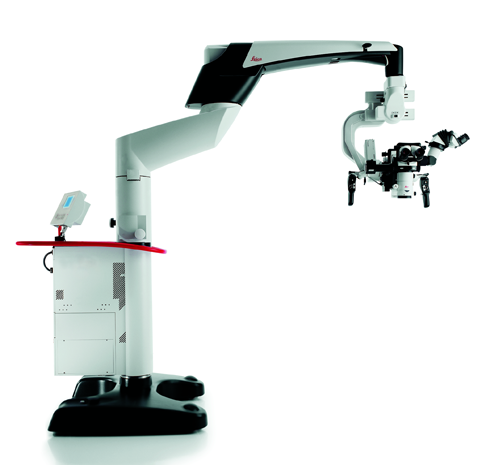
D Spine Clinic uses surgical microscopy during selected cervical and lumbar spine procedures where magnification and clear visualisation of nerves, discs and other fine structures can assist the surgeon.
Microscopic spine surgery does not refer to one specific operation. The surgical microscope is a visualisation tool used as part of procedures such as microdiscectomy and spinal decompression. Dr Dhanish Mehendiratta determines whether microscopic, endoscopic, minimally invasive or conventional techniques are appropriate for the condition being treated.
How a Surgical Microscope Is Used in Spine Surgery
An operating microscope provides magnification, focused illumination and a three-dimensional view of the surgical field.
This can help the surgeon clearly identify structures such as nerve roots, the spinal cord, disc material and surrounding tissues while performing fine surgical steps.
A microscope is different from an endoscope, navigation system or surgical robot. These technologies have different roles and may sometimes be used alongside one another depending on the operation.
When Microscopic Visualisation May Be Used
It is commonly used to treat conditions where the planned operation requires careful visualisation around nerves or other delicate spinal structures.
Examples include:
- Herniated Discs– during procedures such as microdiscectomy to remove disc material compressing a nerve
- Spinal Stenosis– during selected decompression procedures where bone or ligament is removed from around compressed nerves
- Spondylolisthesis– where microscopic visualisation may assist the decompression component of surgery when nerve compression is present
- Degenerative Disc Disease– in selected operations where decompression or another microsurgical step is required
- Spinal Tumors or Cysts– in selected cases where magnified visualisation assists careful dissection around neural structures
- Sciatica– when radiating leg pain is caused by nerve compression that has a surgical indication
The microscope does not determine whether surgery is required. The diagnosis, symptoms, neurological findings and imaging remain the basis for that decision.
Who May Be Suitable for Microscope-Assisted Spine Surgery?
You may be a candidate for microscopic spine surgery if:
- A spinal condition requiring surgery involves nerve or spinal cord compression
- The planned procedure would benefit from magnified visualisation
- Appropriate non-surgical treatment has not helped where conservative care is suitable
- Progressive weakness or another neurological problem makes surgery necessary
- The surgeon determines that a microscopic approach is suitable for the anatomy and procedure
Wanting a smaller incision by itself is not an indication for surgery.
Benefits of Microscopic Spine Surgery
The main benefit of the surgical microscope is improved visualisation of the operative field.
Benefits of Microscopic Spine Surgery: may also include advantages related to the surgical approach being used, but these vary between procedures.
- Smaller incisionsmay be possible when microscopy is combined with a minimally invasive approach.
- Reduced blood lossmay occur in procedures that involve less tissue disruption.
- Less postoperative paincan be associated with smaller surgical exposures, but depends on the operation performed.
- Shorter hospital staysare possible after some limited procedures such as selected microdiscectomies, but are not expected after every microscope-assisted operation.
- Improved cosmetic and functional outcomescannot be attributed to the microscope alone and depend on the condition, operation and individual recovery.
Why Choose D Spine Clinic for Microscopic Spine Surgery?
- Microscopic Spine Expertise:Dr Dhanish Mehendiratta has experience in cervical and lumbar decompression and microendoscopic spine techniques.
- Technology Used for the Right Indication:Microscopy is selected when it adds value to the planned procedure rather than used as a standard approach for every patient.
- Multiple Surgical Approaches:Microscopic, endoscopic, minimally invasive and conventional techniques can be considered according to the condition.
- Second Opinions:Patients already advised spine surgery can consult for review of their scans and proposed surgical approach.
Consult Dr Dhanish Mehendiratta for Microscopic Spine Surgery
Dr Dhanish Vinod Mehendiratta is an Orthopaedic Spine Surgeon with specialist training in cervical and lumbar spine surgery.
His fellowship training includes Hinduja Hospital, the Indian Spinal Injuries Centre and Nottingham University Hospitals. D Spine’s own clinical profile also documents his work in minimally invasive and microscopic spine techniques.
Patients can consult Dr Dhanish to understand whether microscopic visualisation is relevant to the operation being considered and how it differs from other surgical approaches.
Speak with a Spine Expert Today
Consult Dr Dhanish Mehendiratta for assessment, review of scans, surgical planning or a second opinion before spine surgery.
FAQs
Is microscopic spine surgery the same as minimally invasive spine surgery?
No. A surgical microscope provides magnification and illumination. Minimally invasive spine surgery refers to the way the surgeon reaches the spine using a smaller surgical corridor. A microscope can be used during a minimally invasive procedure, but the terms are not interchangeable.
What is the difference between microscopic and endoscopic spine surgery?
Microscopic surgery uses an operating microscope positioned outside the patient to magnify the surgical field. Endoscopic surgery uses a camera placed through an endoscope closer to the area being treated. The appropriate technique depends on the condition and procedure.
Does using a microscope mean my incision will be smaller?
Not necessarily. The microscope improves the surgeon’s view. Incision size depends on the procedure, number of levels involved and surgical approach.
Does a surgical microscope make spine surgery safer?
Magnification and illumination can help the surgeon visualise nerves and other delicate structures more clearly. However, the overall safety of an operation also depends on the condition, procedure, anatomy, surgeon’s technique and the patient’s health.
How will I know whether a microscope will be used during my surgery?
The surgical approach is discussed during treatment planning. If microscopic visualisation is useful for the planned procedure, Dr Dhanish can explain where and why it will be used.
Can a microscope be used together with navigation or robotic technology?
Yes, in some operations different technologies can complement one another. The microscope is primarily used for visualisation, while navigation and robotic systems have different roles in surgical planning, orientation or instrumentation.
What is recovery like after microscope-assisted spine surgery?
Recovery depends mainly on the operation performed rather than on the microscope itself. A limited microdiscectomy, for example, has a different recovery pathway from a multi-level decompression or fusion procedure.
Medical Disclaimer
The information on this page is intended for general patient education and does not replace a medical consultation, diagnosis or individual treatment advice. Suitability for artificial disc replacement depends on a patient’s symptoms, clinical examination, imaging and overall spinal condition. Treatment recommendations may vary from person to person.