
Artificial Disc Replacement Surgery in Mumbai
Non Surgical Spine Treatments
Surgical
Recent Advances
Teleconsultation
CALL FOR APPOINTMENT
8960599999 / 9999985957
drdhanish@dspinesurgeon.com
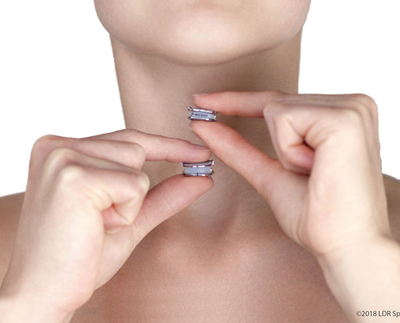
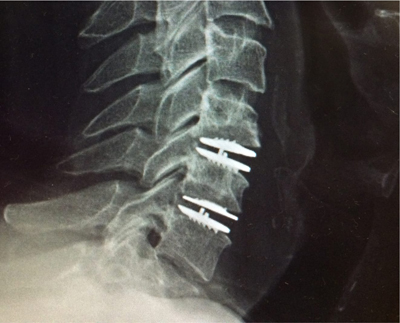
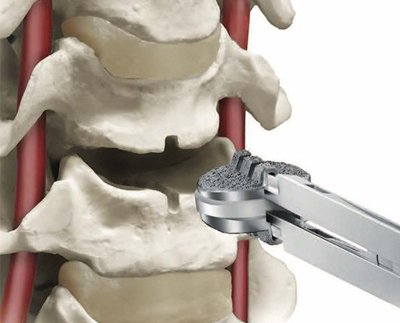
D Spine Clinic provides assessment and Artificial Disc Replacement Surgery in Mumbai for patients with cervical or lumbar disc disease where preserving movement at the treated level may be appropriate.
Artificial disc replacement (ADR), or disc arthroplasty, replaces a diseased disc with an artificial implant designed to maintain motion. It is not suitable for every slipped or degenerated disc. Dr. Dhanish Mehendiratta evaluates symptoms, examination findings, imaging, spinal stability and bone and joint health before recommending ADR.
When Artificial Disc Replacement May Be Considered
Artificial disc replacement may be recommended if:
- Symptoms are linked to a specific diseased disc
- Appropriate non-surgical treatment has not provided sufficient relief, or neurological symptoms are progressing
- Imaging findings match the symptoms and examination
- The treated level is suitable for a motion-preserving implant
- There is no significant instability, deformity, severe facet-joint disease or poor bone quality
An MRI showing disc degeneration alone does not determine whether ADR is appropriate.
Cervical and Lumbar Artificial Disc Replacement
Cervical Disc Replacement
Cervical ADR may be considered in selected patients with symptomatic cervical disc disease, particularly when a damaged disc is causing arm pain, numbness, weakness or other neurological symptoms.
Lumbar Disc Replacement
Lumbar ADR may be considered in carefully selected patients with disc-related lower-back pain. Suitability depends on the affected level, facet joints, spinal stability, bone quality and other possible sources of pain.
Artificial Disc Replacement vs Spinal Fusion
Spinal fusion stops movement at the treated level. ADR aims to preserve movement by replacing the diseased disc with a mobile implant.
Choosing ADR over spinal fusion can offer several advantages:
- Preservation of Motion:The implant is designed to maintain movement at the treated level.
- Reduced Stress on Adjacent Levels: Preserving motion may reduce biomechanical stress on nearby discs, although it cannot guarantee prevention of future degeneration.
- Faster Recovery:Some patients may return to everyday activities sooner because bone fusion is not required. Recovery varies between patients.
- Pain Relief: In appropriately selected patients, ADR aims to relieve symptoms arising from the treated disc while maintaining motion.
Assessment and Surgical Planning at D Spine Clinic
Before recommending ADR, Dr Dhanish reviews the patient’s symptoms, neurological findings, previous treatment and imaging.
Assessment may include X-rays for alignment and movement, MRI for the discs and nerves, CT for detailed bone assessment and bone-density testing where required.
The aim is to determine not only whether surgery is needed, but whether artificial disc replacement is the right operation.
Why Choose D Spine Clinic for Artificial Disc Replacement?
- Specialist Spine Expertise:Dr Dhanish Mehendiratta has dedicated training in cervical and lumbar spine surgery.
- Careful Patient Selection:ADR is recommended only when the disc, spinal stability, bone quality and clinical findings make it appropriate.
- Motion-Preserving Options:Artificial disc replacement is considered alongside fusion and other surgical options rather than as a standard solution.
- Surgical Planning and Follow-Up:Imaging, implant planning, recovery guidance and post-operative follow-up form part of the treatment pathway.
Consult Dr Dhanish Mehendiratta for Artificial Disc Replacement
Dr Dhanish Vinod Mehendiratta is an Orthopaedic Spine Surgeon with specialist training in cervical and lumbar spine surgery, including fellowships at Hinduja Hospital, the Indian Spinal Injuries Centre and Nottingham University Hospitals.
Patients already advised spinal fusion or disc replacement can also consult for a second opinion.
Book an Artificial Disc Replacement Consultation
Consult Dr Dhanish Mehendiratta for evaluation of cervical or lumbar disc disease, review of scans, surgical planning or a second opinion.
FAQs
What happens during an artificial disc replacement consultation at D Spine Clinic?
The consultation includes a review of your symptoms, neurological examination, previous treatment and available imaging. Dr Dhanish assesses whether the painful or compressed level is suitable for disc replacement and whether another treatment may be more appropriate.
Do I need new scans before meeting Dr Dhanish?
Not necessarily. Bring any recent MRI, X-rays or CT scans you already have. After reviewing your symptoms and existing investigations, Dr Dhanish can advise whether additional or updated imaging is required.
How is artificial disc replacement planned at D Spine Clinic?
If surgery is appropriate, the planning considers the spinal level involved, nerve or spinal cord compression, spinal alignment, bone quality and the condition of nearby joints. The type of artificial disc and surgical approach are selected according to the individual case.
How long will I need to stay in hospital after artificial disc replacement?
Hospital stay varies according to whether the procedure is cervical or lumbar, the number of levels treated and how the patient recovers after surgery. The expected stay is discussed before the procedure.
When can I walk and return to normal daily activities?
Patients are generally encouraged to begin walking once it is safe after surgery. Return to work, driving and routine activities depends on pain control, neurological recovery, the type of work involved and whether the surgery was cervical or lumbar.
Will I need physiotherapy after artificial disc replacement?
Rehabilitation is planned according to the procedure and individual recovery. Some patients may benefit from guided physiotherapy, mobility work or strengthening exercises as they progress after surgery.
Will I have permanent restrictions after artificial disc replacement?
Many patients can return to a broad range of normal activities after recovery. Long-term restrictions, if any, depend on the spinal level treated, the condition of the rest of the spine and whether the patient performs heavy physical work or high-impact sport.
What follow-up is required after artificial disc replacement surgery?
Follow-up visits are used to review wound healing, pain, neurological recovery, movement and implant position. Imaging may be advised during follow-up depending on the procedure and the patient’s progress.
Medical Disclaimer
The information on this page is intended for general patient education and does not replace a medical consultation, diagnosis or individual treatment advice. Suitability for artificial disc replacement depends on a patient’s symptoms, clinical examination, imaging and overall spinal condition. Treatment recommendations may vary from person to person.