
Scoliosis Treatment in Mumbai
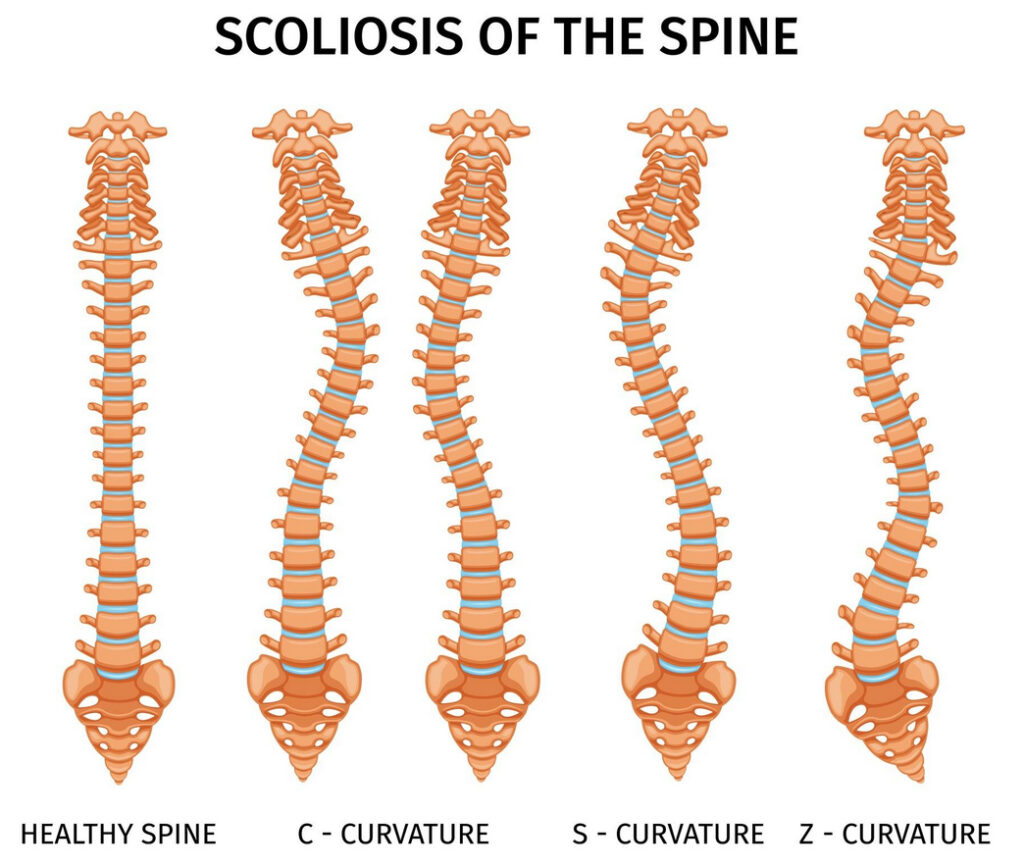
D Spine Clinic provides specialist scoliosis treatment for adolescents and adults with abnormal spinal curvature, progressive deformity, back or leg symptoms, or an existing scoliosis diagnosis.
Treatment is not determined by the curve alone. Age, remaining growth, curve size and pattern, progression, spinal balance and symptoms all matter. At D Spine, Mumbai, Dr Dhanish Mehendiratta evaluates these factors before recommending observation, bracing, rehabilitation or surgery.
Types of Scoliosis We Evaluate
Scoliosis is a sideways curvature of the spine accompanied by rotation of the vertebrae. It may involve the thoracic spine, lumbar spine or both.
Common types include:
- Idiopathic scoliosis – most often identified during adolescence, without a single known cause
- Congenital scoliosis – related to abnormal development of the vertebrae before birth
- Neuromuscular scoliosis – associated with neurological or muscular conditions
- Degenerative (adult) scoliosis – develops later in life as discs and spinal joints change with age
Adult degenerative curves frequently involve the lower back. Patients searching for lumbar spine scoliosis are often referring to this type of lumbar or thoracolumbar scoliosis.
When Should Scoliosis Be Assessed?
Scoliosis does not always cause pain. In younger patients, changes in posture or body symmetry are often noticed first.
A spine assessment is useful for:
- Uneven shoulders or hips
- A prominent rib or shoulder blade
- Visible sideways curvature or trunk shift
- A curve known to be increasing during growth
- Persistent back pain in an adult with scoliosis
- Leg pain, numbness or weakness suggesting nerve compression
- Increasing difficulty standing upright or maintaining balance
Very large thoracic curves can occasionally affect breathing, but this is not typical of mild or moderate scoliosis.
Scoliosis Assessment at D Spine Clinic
Patients consulting scoliosis specialists at D Spine, Mumbai undergo assessment according to their age, symptoms and type of curve.
Physical Examination:
Posture, shoulder and pelvic alignment, spinal balance and flexibility are assessed. In younger patients, growth remaining is also important.
X-rays:
Standing full-spine X-rays allow the curve to be measured using the Cobb angle and help assess overall spinal alignment.
MRI / CT Scans:
These are used selectively when more information is needed about the spinal cord, nerves, discs or bone anatomy.
EOS 3D Scans (if indicated):
Where this imaging is available and clinically useful, standing low-dose imaging can provide additional information about overall spinal alignment.
The Cobb angle is important, but treatment is not decided from one number alone.
Scoliosis Treatment at D Spine Clinic
D Spine provides both non-surgical care and surgical scoliosis treatments in Mumbai. The approach differs substantially between a growing adolescent and an adult with degenerative scoliosis.
Observation and Bracing
Observation & Monitoring:
Small or stable curves may simply need periodic examination and X-rays to check whether they are progressing.
Bracing:
A brace may be recommended for selected adolescents who are still growing and have a curve at risk of progression. Its main purpose is to reduce further progression rather than permanently straighten an existing curve.
Rehabilitation and Symptom Management
Physiotherapy & Exercise:
Exercise and rehabilitation can help with strength, posture, mobility and symptoms. In adults, treatment may also focus on improving function and spinal balance.
Pain Management:
Medication or targeted pain treatment may be considered for adults with symptomatic degenerative scoliosis.
When Is Scoliosis Surgery Considered?
The reason for surgery depends on the patient’s age and type of scoliosis.
In adolescents with idiopathic scoliosis, surgery is commonly discussed when curves approach or exceed approximately 45–50 degrees and are expected to continue progressing.
For adults, the Cobb angle alone does not determine the need for surgery. Surgery may be considered when scoliosis causes:
- Disabling back or leg pain despite appropriate non-operative treatment
- Significant nerve compression
- Progressive deformity
- Loss of spinal balance
- Marked limitation of everyday function
Patients comparing best scoliosis surgery doctors should therefore look for experience with both the type of deformity and the specific problem surgery is intended to correct.
Surgical Options
Spinal Fusion:
Instrumentation and bone graft are used to correct and stabilise selected spinal levels while fusion takes place.
Minimally Invasive Surgery:
Selected adult deformity procedures may use less invasive approaches, depending on the curve and surgical objective. They are not suitable for every scoliosis correction.
Osteotomy:
In rigid or more complex deformities, bone may need to be carefully cut and realigned to restore spinal balance.
Detailed deformity-correction procedures should be discussed after the curve and overall alignment have been fully assessed.
Why Choose D Spine Clinic for Scoliosis Treatment?
- Spinal Deformity Expertise: Dr Dhanish Mehendiratta has dedicated fellowship training in spinal deformity and complex deformity surgery.
- Age-Specific Treatment Planning: Adolescent scoliosis and adult degenerative scoliosis are assessed through different treatment pathways.
- Non-Surgical and Surgical Options: Observation, bracing, rehabilitation and surgery are considered according to the individual curve.
- Second Opinions: Patients already advised scoliosis correction or spinal fusion can consult for review of their X-rays and surgical plan.
Consult Dr Dhanish Mehendiratta for Scoliosis
Dr Dhanish Mehendiratta is an Orthopaedic Spine Surgeon with specialist training in spinal deformity, cervical and lumbar spine surgery.
His training includes an AO Spine fellowship in robotics and spinal deformity at the Indian Spinal Injuries Centre, along with further fellowship training in spinal trauma and complex deformity surgery at Nottingham University Hospitals.
At D Spine Clinic, patients seeking the best clinics for scoliosis surgery in Mumbai can consult Dr Dhanish for scoliosis assessment, review of standing X-rays, treatment planning and second opinions.
D Spine provides top scoliosis treatment in Mumbai across adolescent and adult scoliosis, with non-surgical care, deformity assessment and surgical correction considered according to the type, severity and progression of the curve.
Book a Scoliosis Consultation
Consult Dr Dhanish Mehendiratta for scoliosis assessment, review of standing X-rays, treatment planning or a second opinion before deformity correction surgery.
Frequently Asked Questions
What is scoliosis?
Scoliosis is a sideways spinal curvature with rotation of the vertebrae. A Cobb angle greater than 10 degrees on a standing X-ray is generally used to define scoliosis.
What are the common causes of scoliosis?
Most adolescent scoliosis is idiopathic, meaning there is no single identifiable cause. Scoliosis can also be congenital, associated with neuromuscular conditions or develop in adulthood because of spinal degeneration.
Does every child with scoliosis need a brace?
No. Bracing is mainly used for selected children or adolescents who are still growing and whose curves have a meaningful risk of progression. Smaller curves may only need observation.
Can exercise straighten scoliosis?
Exercise can improve strength, posture, mobility and symptoms, but it should not be assumed to permanently correct a structural scoliosis curve or reliably prevent progression in a growing child.
When is scoliosis surgery recommended?
For adolescent idiopathic scoliosis, surgery is commonly considered for progressive curves around 45–50 degrees or greater. In adults, surgery is based more on pain, nerve compression, imbalance, progression and loss of function than on the curve angle alone.
How long does it take to recover from scoliosis surgery?
Recovery depends on the extent of correction, number of levels treated, age and overall health. Walking usually begins during the early recovery period, while return to school, work, exercise and unrestricted activity occurs gradually over the following weeks and months.
Can I get a second opinion before scoliosis surgery?
Yes. Bring your standing spinal X-rays, MRI or CT scans if available, previous reports and details of any bracing or treatment already tried. A second opinion can review the reason surgery has been advised and the proposed correction.
How can I book a consultation with a scoliosis specialist at D Spine?
An appointment can be booked with Dr Dhanish Mehendiratta for a new scoliosis assessment, follow-up of an existing curve or a second opinion before surgery.
Medical Disclaimer
The information on this page is intended for general patient education and does not replace a medical consultation, diagnosis or individual treatment advice. Suitability for artificial disc replacement depends on a patient’s symptoms, clinical examination, imaging and overall spinal condition. Treatment recommendations may vary from person to person.