
Spinal Infection Surgery in Mumbai
Non Surgical Spine Treatments
Surgical
Recent Advances
Teleconsultation
CALL FOR APPOINTMENT
8960599999 / 9999985957
drdhanish@dspinesurgeon.com
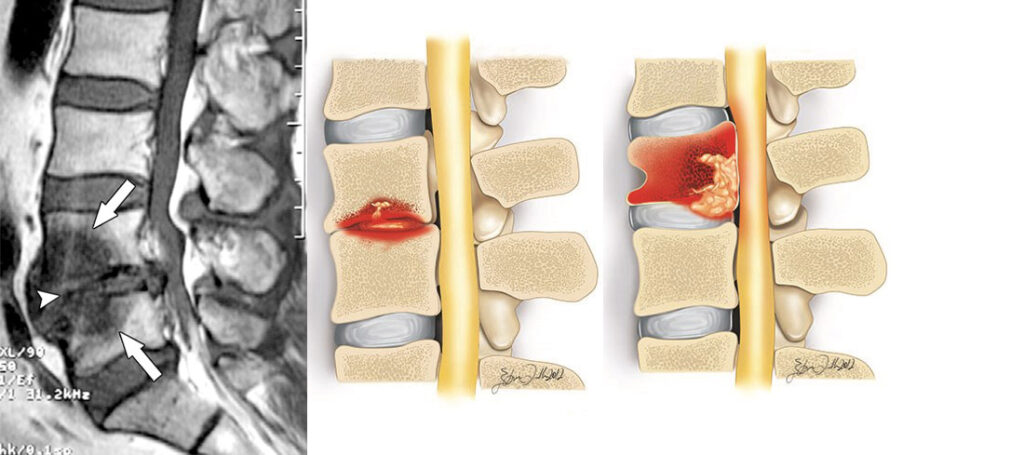
D Spine Clinic provides specialist assessment and surgical treatment for Spinal Infections in Mumbai, including infections involving the vertebrae, discs, spinal canal and tissues around the spine.
Not every spinal infection requires surgery. Many patients are treated with targeted antimicrobial therapy once the cause of infection is identified. Dr. Dhanish Mehendiratta evaluates whether surgery is needed for drainage, nerve or spinal cord compression, removal of infected tissue, spinal instability or another complication.
Spinal Infections We Evaluate
Typical Types of Infections in the Spine include:
- Vertebral Osteomyelitis – infection involving one or more vertebral bones
- Discitis – infection or inflammation involving the intervertebral disc space
- Epidural Abscess – a collection of infected material within the spinal canal that may place pressure on nerves or the spinal cord
- Tuberculous Spondylitis (Pott’s Disease) – spinal infection caused by tuberculosis
- Post-Surgical Infections – infections developing after a previous spinal procedure, including infections involving implants
The treatment pathway varies considerably between these conditions. Identifying the infection and its cause is important before deciding whether medical treatment alone is sufficient or surgery is required.
When a Spinal Infection Needs Urgent Assessment
Back or neck pain alone does not confirm a spinal infection. More urgent medical assessment is required when suspected infection is associated with:
- New or increasing weakness in the arms or legs
- Numbness or loss of sensation
- Difficulty walking
- Loss of bladder or bowel control
- Fever with severe or worsening back or neck pain
- Signs of sepsis or significant systemic illness
- Increasing neurological symptoms with a known spinal infection
A spinal epidural abscess or infection causing acute neurological compromise can deteriorate quickly and requires urgent hospital assessment.
Diagnosis and Treatment Planning at D Spine Clinic
Evaluation begins with the patient’s symptoms, neurological examination, medical history and any previous treatment.
Investigations are chosen according to the clinical situation.
MRI
Often provides the most useful imaging assessment of the discs, vertebrae, spinal canal, nerves and surrounding soft tissues.
Blood Tests
Inflammatory markers such as ESR and CRP, along with blood cultures, may help establish whether infection is present and identify the organism responsible.
CT Scan and X-rays
May provide additional information about bone destruction, spinal alignment and stability.
Biopsy or Tissue Culture
In selected cases, a sample from the affected area may be required to identify the organism and guide antimicrobial treatment.
Diagnosis and treatment may involve coordination between the spine surgeon, infectious disease or medical team and other specialists depending on the type of infection.
When Is Surgery Considered for a Spinal Infection?
Many spinal infections can be treated without an operation when the spine is stable, neurological function is preserved and the infection responds to appropriate medical therapy.
Indications for Surgical Treatment of Spinal Infections may include:
- Progressive neurological weakness or other deficits
- Spinal cord or nerve compression
- An abscess requiring surgical drainage
- Significant destruction causing spinal instability or deformity
- Persistent or worsening infection despite appropriate antimicrobial treatment
- Severe persistent pain associated with structural destruction
- Need for tissue diagnosis when less invasive methods have not provided an answer
The decision is based on the infection, neurological findings, spinal stability and response to treatment rather than imaging alone.
What Spinal Infection Surgery May Involve
The operation depends on where the infection is located and what problem needs to be corrected.
Debridement and Drainage
Infected or damaged tissue may be removed and an abscess drained to control the source of infection and obtain tissue for testing.
Decompression
If an abscess, damaged tissue or bone is pressing on the spinal cord or nerves, decompression may be performed to relieve that pressure.
Stabilisation and Fusion
Infection can sometimes destroy enough bone to make the spine unstable. In these situations, screws, rods, grafts or other forms of reconstruction may be required to restore stability.
Surgery forms only one part of treatment. Appropriate antimicrobial therapy and clinical follow-up remain important before and after the procedure.
Why Choose D Spine Clinic for Spinal Infection Surgery?
- Specialist Spine Assessment: Dr Dhanish Mehendiratta evaluates neurological involvement, spinal stability and the structural effects of infection before surgery is planned.
- Diagnosis Before Surgery: Imaging, blood investigations and tissue diagnosis are considered together where required.
- Surgical Options: Treatment may involve drainage, debridement, decompression, stabilisation or reconstruction depending on the infection.
- Comprehensive Care: Surgical care is coordinated with antimicrobial treatment, rehabilitation and follow-up according to the patient’s condition.
Consult Dr Dhanish Mehendiratta for a Spinal Infection
Dr Dhanish Vinod Mehendiratta is an Orthopaedic Spine Surgeon with specialist training in cervical, lumbar, spinal trauma and complex spine surgery.
His fellowship training includes Hinduja Hospital, the Indian Spinal Injuries Centre and Nottingham University Hospitals in the United Kingdom.
Patients with a diagnosed spinal infection, epidural abscess, spinal instability or an existing recommendation for surgery can consult Dr Dhanish for assessment, surgical planning or a second opinion.
Book a Spinal Infection Consultation
Consult Dr Dhanish Mehendiratta for evaluation of a spinal infection, review of scans and reports, surgical planning or a second opinion.
Frequently Asked Questions
Do I need to see a spine surgeon if I am already taking antibiotics for a spinal infection?
Not every patient receiving antimicrobial treatment needs surgery. A spine-surgeon review may be useful when there is nerve or spinal cord compression, instability, deformity, an abscess, persistent symptoms or concern that the infection is not responding as expected.
What should I bring to a spinal infection consultation?
Bring your MRI, CT or X-rays if available, blood-test and culture reports, biopsy results, discharge summaries and details of antibiotics or other treatment already received. Previous operative records are also important if the infection developed after spine surgery.
Will I need a biopsy before treatment starts?
Not every patient requires a biopsy. In some cases blood cultures or other investigations identify the organism. When the cause remains uncertain, tissue sampling may be required so treatment can be directed towards the specific infection.
If spinal infection surgery is required, how long might I stay in hospital?
Hospital stay depends on the infection, operation performed, neurological condition and need for intravenous or other antimicrobial treatment. Drainage of a localised infection and a complex reconstruction have very different hospital and recovery pathways.
Will antibiotics still be required after spinal infection surgery?
Usually, surgery does not replace antimicrobial treatment. Antibiotics, anti-tubercular medicines or antifungal treatment may still be required depending on the organism and type of infection. The duration is decided according to the individual diagnosis and treatment response.
What happens to spinal implants if an infection develops after surgery?
Management depends on when the infection developed, whether the implants remain stable and the organism involved. Some infections can be treated with surgical cleaning while retaining stable implants, while others may require implant revision or removal.
When can I return to walking and normal activity after spinal infection surgery?
Mobilisation depends on spinal stability, neurological recovery and the procedure performed. Walking may begin early in some patients, while those undergoing reconstruction or treatment for significant infection may require a more gradual rehabilitation plan.
Can I get a second opinion if surgery for a spinal infection has already been advised?
Yes. A second opinion can review the diagnosis, cultures, scans, neurological findings and reason surgery has been recommended, and clarify what the proposed operation is intended to achieve.
Medical Disclaimer
The information on this page is intended for general patient education and does not replace a medical consultation, diagnosis or individual treatment advice. Suitability for artificial disc replacement depends on a patient’s symptoms, clinical examination, imaging and overall spinal condition. Treatment recommendations may vary from person to person.